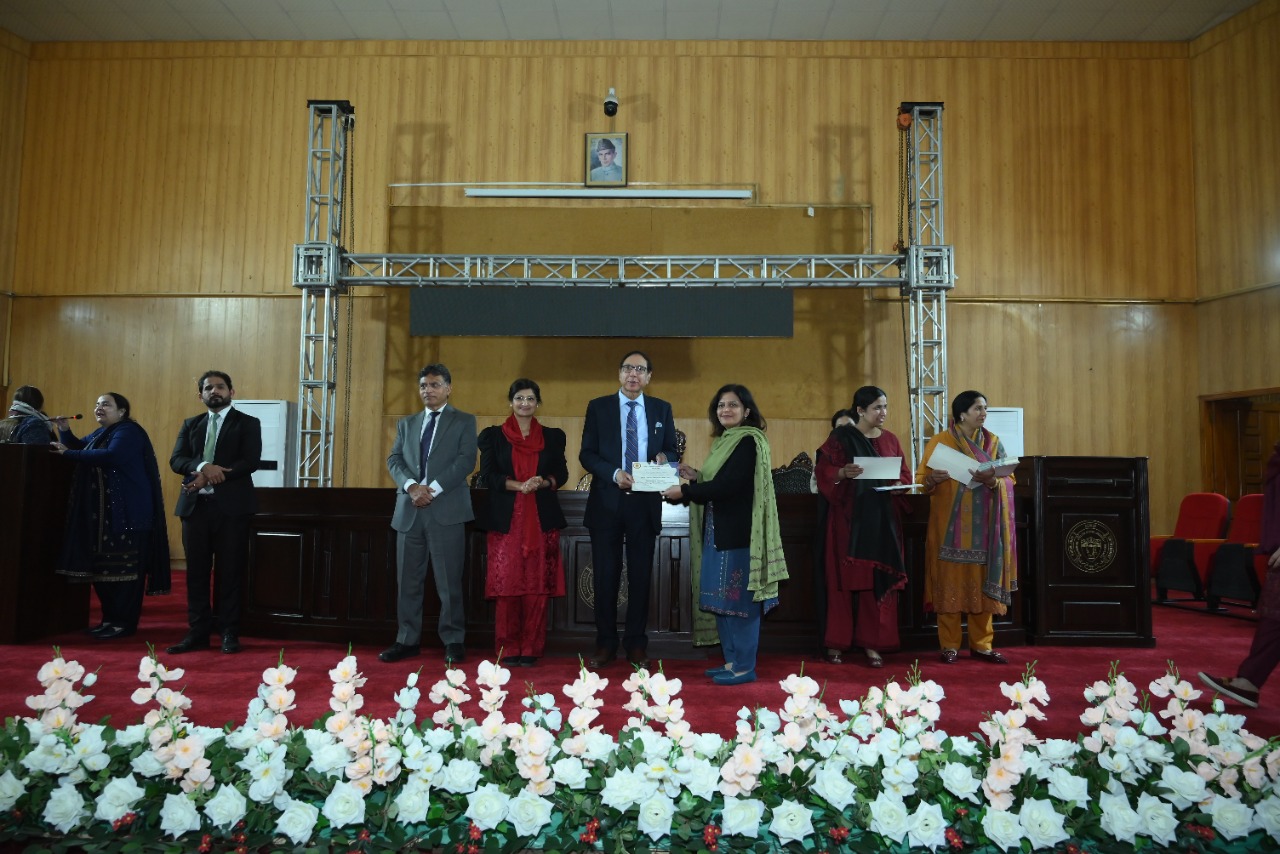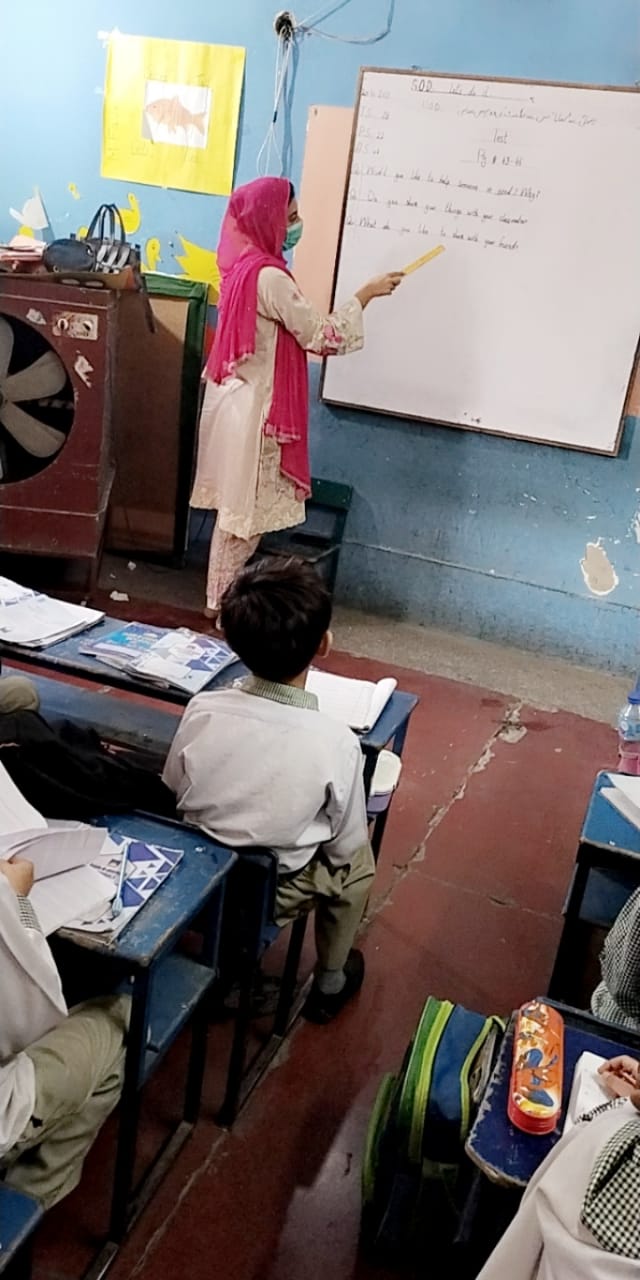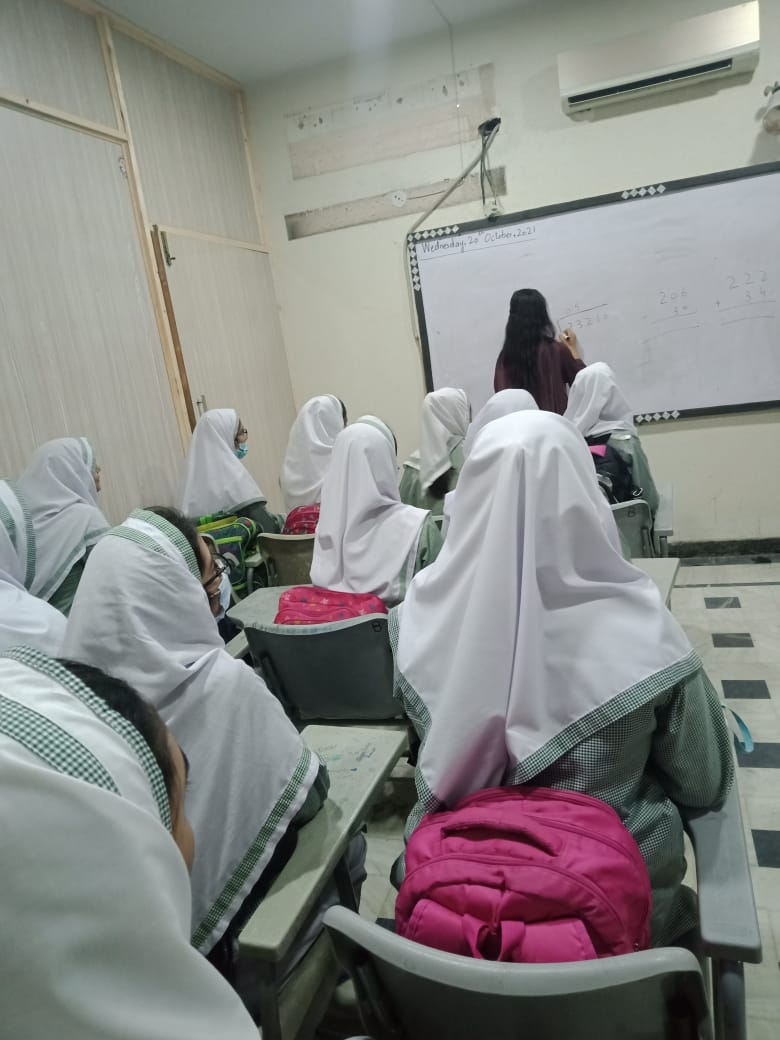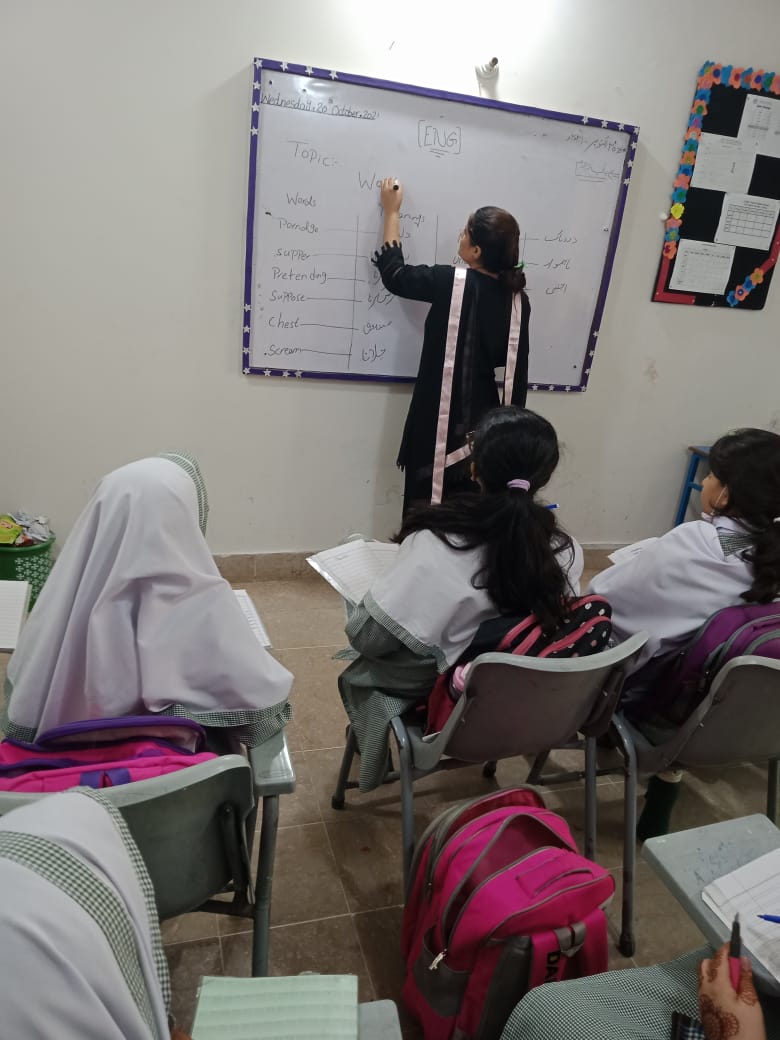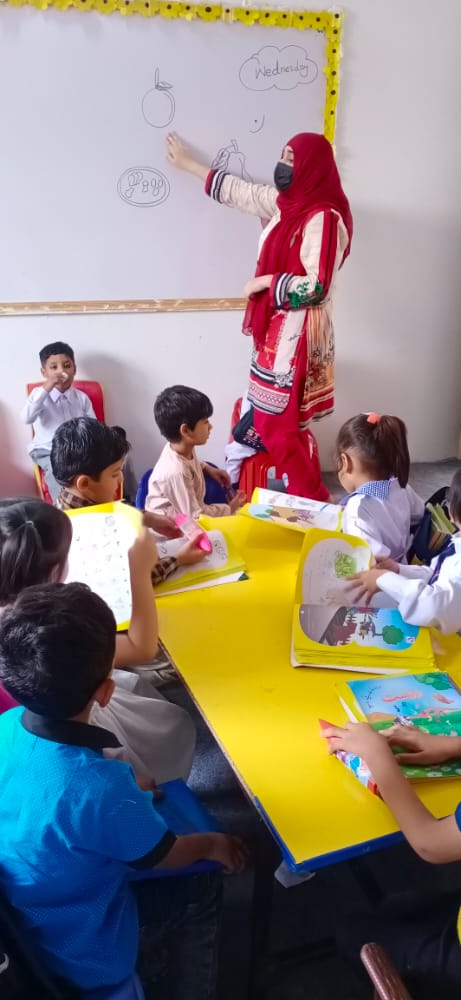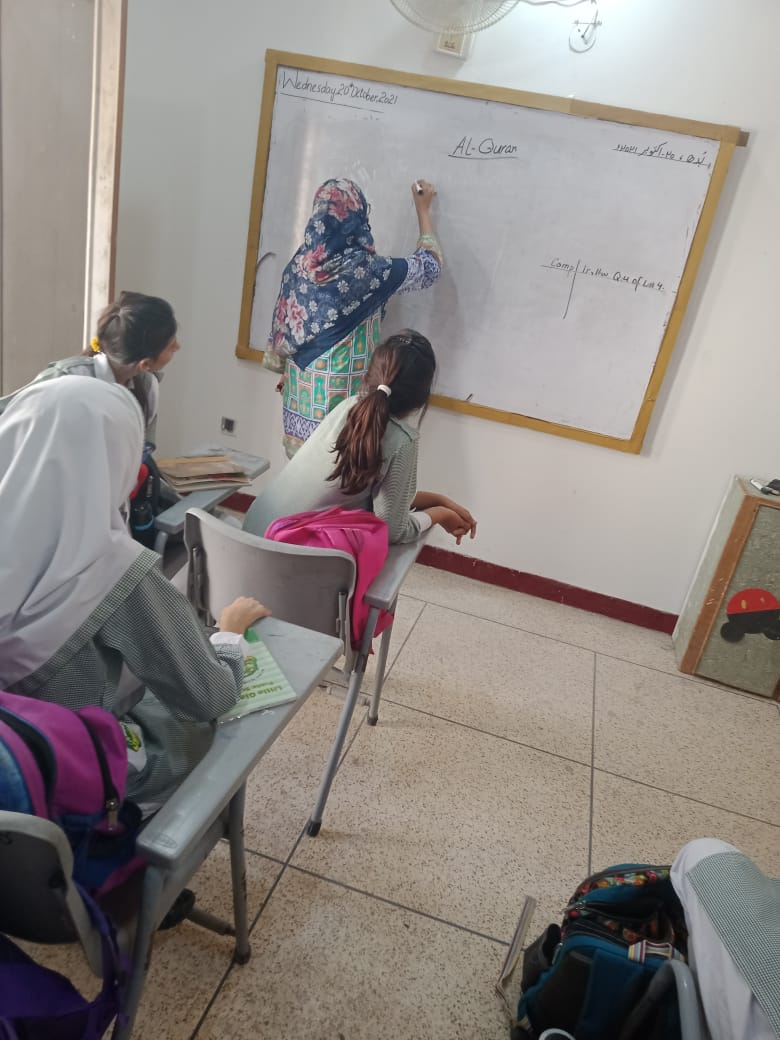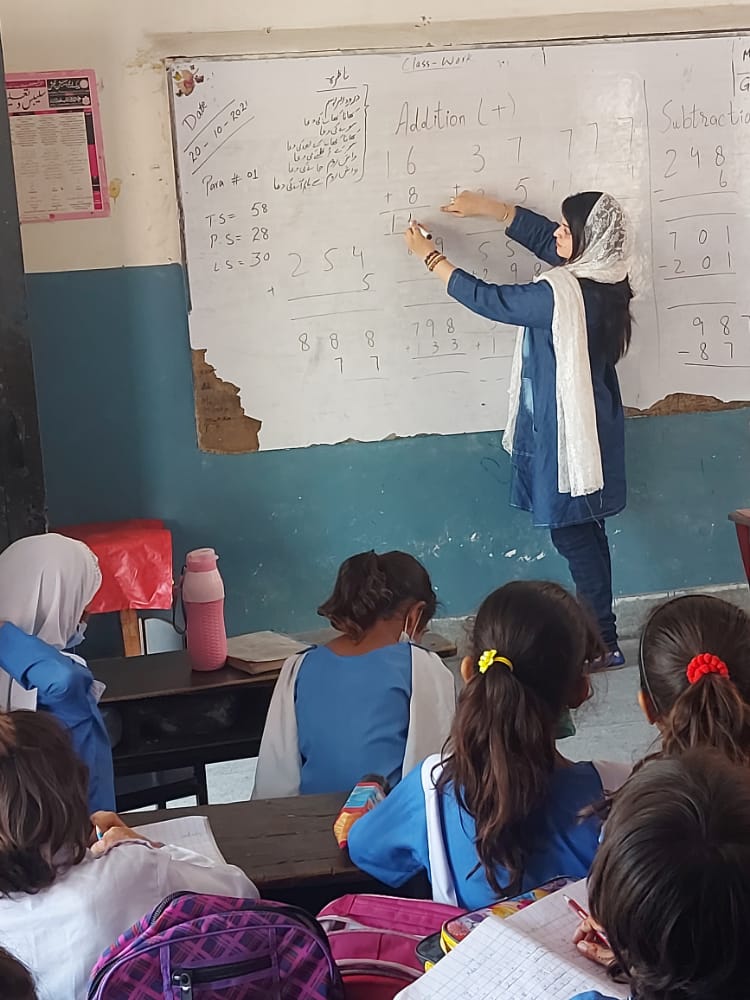

Education is the backbone of every nation. The standard of education needs to be constantly raised to cater the demands of a fast-moving age. The department of Education aspires to produce competent educationists, inspired by new zeal and equipped with modern theories and methods. The teaching methodology all over the world has undergone a massive change over the past few years. Our system of education needs to be revised extensively to meet the requirements of the modern age. The department is currently running five academic programs including Bachelor of Education (B.Ed.) (4 Years), Associate Degree in Education (ADE) (2 Years), B.Ed. (1.5 Year), B.Ed. (2.5 Years) and M.Phil (2 Years), aimed at providing quality education and professional development opportunities.
The vision of the Department of Education is to develop competent, reflective and professionally skilled educators who can meet the evolving needs of society. It aims to promote excellence in teaching, research, and innovation for improving the quality of education at all levels.
The mission of the Department of Education will strive to promote quality education, training, and research. It will prepare competent educators through modern teaching methods, strengthen their pedagogical and research skills, and provide diverse learning opportunities. The department will also promote professional ethics and contribute to improving educational standards in society.


| Title | Fee Structure |
|---|---|
| Associate Degree (2-Year), B.Ed. (1.5-Year), B.Ed. (2.5-Year) – Morning 2026 | View |
| Associate Degree (2-Year), B.Ed. (1.5-Year), B.Ed. (2.5-Year) – Evening 2026 | View |
| BS - Morning 2026 | View |
| BS - Evening 2026 | View |
| MS/M.Phil. - 2026 | View |
| Ph.D. – 2026 | View |
DR. BUSHRA NAZ
In: Effect of Problem Solving Approach on Achievement of Eighth Grade Students in Mathematics,editor,(eds.)title series title and number,2616-7093,http://www.gcwus.edu.pk/journals-details/; GCWU Sialkot,30-DEC-20. p.68-77 |
DR. BUSHRA NAZ
In: USES OF ICT ON ADMINISTRATORS FOR COMMUNICATION PRACTICES IN PUBLIC SECTOR SECONDARY SCHOOLS OF LAHORE,editor,(eds.)title series title and number,1992-4399 ,ISSUE DOI:10.29270/Nh.2021.15.1(29).08;Greenwich University Karachi, Pakistan,01-JAN-21. p.135-148 |
DR. AMINAH QAYYUM
In: Effect of Scaffolding on Social and Emotional Learning (SEL) of Elementary School Students,editor,(eds.)title series title and number,,Allama Iqbal Open University, Islamabad;Journal of Social Sciences and Humanities,16-SEP-19. p.83-92 |
DR. AMINAH QAYYUM
In: Scaffolding the Scaffolding: Assisting the Student???s Social Emotional Learning at School,editor,(eds.)title series title and number,1305-3515,http://ilkogretim-online.org;Ilkogretim Online,16-SEP-20. p.3876-3884 |
DR. AMINAH QAYYUM
In: Co-Education verses Single Gender Education: Influence of different Educational System on the Student Self-esteem, Confidence Level, and academic achievement in Pakistan ,editor,(eds.)title series title and number,2708-1737,www.gujr.com.pk;Gomal University,31-DEC-20. p.94-106 |
DR. AMINAH QAYYUM
In: Impact Analysis of Students??? Academic Achievement in High and Low Noise Level Schools Situated on Roadside at Faisalabad,editor,(eds.)title series title and number,1305-3515,http://ilkogretim-online.org;Elementary Education Online,20-AUG-21. p.3196-3201 |
DR. AMINAH QAYYUM
In: Analyzing the workload and its Effects on Teacher's Motivation in the City of Faisalabad, Pakistan,editor,(eds.)title series title and number,2308-7846,2307-4000,Journal of South Asian Studies;Journal of South Asian Studies,26-DEC-22. p.317-322 |
DR. AMINAH QAYYUM
In: Academic Language Proficiency as a Psychological Barrier to Higher Education Access: Voices of First Generation University Students,editor,(eds.)title series title and number,0827-3383 p,Sped sp. z o.o. Legion??w 6 43-300 Bielsko-Bia??a, Poland;editor@internationalsped.com,15-JUN-26. p.402-410 |
SANA KHAN
In: Impact of Intrinsic Motivation on Student???s Learning at Elementary Level,editor,(eds.)title series title and number,2708-2113,2708-3608,Education Department;GCWUF,10-JUN-21. p.174-187 |
SANA KHAN
In: LANGUAGE LEARNING STRATEGIES USED BY ENGLISH PREPARATORY SCHOOL OF EFL LEARNERS IN THE UNIVERSITIES OF CYPRUS,editor,(eds.)title series title and number,1567-214X,PalArch's Journal of Archaeology of Egypt/ Egyptolog;https://archives.palarch.nl/index.php/jae/article/view/10186/9353,23-JUN-21. p.5019-5037 |
SANA KHAN
In: Urdu English Foreign Language Learners Voices Learning English Online During the COVID-19,editor,(eds.)title series title and number,1996-7195,Education Department;GCWUF,05-MAY-22. p.495-498 |
SANA KHAN
In: A Comparative Study of Early Childhood Education Services Provided By Public and Private Institute in Pakistan,editor,(eds.)title series title and number,1308-5581,Education Department;GCWUF,05-MAY-22. p.4035-4042 |
SANA KHAN
In: Effect of Using Symbolab Calculator In Teaching Simultaneous Equations On Students??? Conceptual Understanding At The Elementary Level In Pakistan: Mathematics Attitude in Technological Corners,editor,(eds.)title series title and number,2717-7564,Education Department;GCWUF,01-JUN-23. p.117-124 |
SANA KHAN
In: Classroom Quality in Terms of Structural and Process Quality Dimensions at Early Childhood Level in Pakistan,editor,(eds.)title series title and number,2717-7564,Education Department;GCWUF,05-JUN-23. p.80-96 |
SANA KHAN
In: Impact of Parental Involvement on Achievement Score of Students At Elementary Level,editor,(eds.)title series title and number,2790-6884,Education Department;GCWUF,30-JUN-23. p.46-56 |
SANA KHAN
In: Mind Mapping Teaching Method to teach the Subject of Expository Writing-I to the Graduates of Public Sector University in Pakistan,editor,(eds.)title series title and number,2708-4175,Education Department;GCWUF,04-DEC-23. p.2061-2074 |
SANA KHAN
In: EXPLORING TEACHER EDUCATOR CONCEPTIONS ON SUSTAINABLE DEVELOPMENT AND ITS INTEGRATION IN THE EDUCATION SYSTEM,editor,(eds.)title series title and number,2059-6588,Education Department;GCWUF,31-MAR-24. p.1-15 |
SANA KHAN
In: THE EFFECT OF EMOTIONAL INTELLIGENCE AND SELF-EFFICACY ON THEEFFECTIVENESS OF PROSPECTIVE TEACHERS IN PUBLIC UNIVERSITIES OF LAHORE, PAKISTA,editor,(eds.)title series title and number,2959-6588,Education Department;GCWUF,25-APR-24. p.4638-4655 |
SANA KHAN
In: Knowledge, Attitude and Self-efficacy of Pre-service Teachers about Sustainable Development in Pakistan: A Quasi-Experimental Study,editor,(eds.)title series title and number,2059-6588,Education Department;GCWUF,25-APR-24. p.4619-4637 |
SANA KHAN
In: INVESTIGATING ETHICAL DIMENSIONS IN SUPERVISOR-SUPERVISEE RELATIONSHIPS: AN INSIGHTS FROM DOCTORAL SUPERVISORS FROM PUBLIC SECTOR UNIVERSITIES,editor,(eds.)title series title and number,2959-3808|2959-2461,Education Department;GCWUF,05-JUN-24. p.1907-1913 |
SANA KHAN
In: EXPLORING RELATIONSHIP BETWEEN MINDFULNESS LEVELS AND ACADEMIC PERFORMANCE OF PROSPECTIVE TEACHERS IN THE SUBJECT OF TECHNICAL WRITING AND PRESENTATION SKILLS AT UNIVERSITY LEVEL IN PAKISTAN,editor,(eds.)title series title and number,2959-2461,Education Department;GCWUF,15-JUN-24. p.2277-2284 |
SANA KHAN
In: IMPACT OF MIND MAPPING ACTIVITIES ON STUDENTS LEARNING IN GENERAL SCIENCE SUBJECT AT ELEMENTARY LEVEL,editor,(eds.)title series title and number,2709-4030,Education Department;GCWUF,24-JUN-24. p.911-926 |
SANA KHAN
In: An Investigation of the Influence of ChatGPT on Advanced ELT Education: A correlational study,editor,(eds.)title series title and number,2709-4022,2709-4030,Education Department;GCWUF,24-JUN-24. p.902-910 |
SANA KHAN
In: IMPACT OF LEADERSHIP STYLES AND SERVICES ON THE QUALIYOF EARLY CHILDHOOD EDUCATION IN PUBLIC AND PRIVATE INSTITUTE,editor,(eds.)title series title and number,2959-3808|2959-2461,Education Department;GCWUF,25-JUN-24. p.2501-2510 |
SOMIA YAQUB
In: Investigation Of Rhetorical Move Structure of Theses Abstracts at Government College Women University, Faisalabad Pakistan: A Genre Analysis,editor,(eds.)title series title and number,2201-1323,IJICC;IJICC,01-JAN-70. p.315-325 |
SOMIA YAQUB
In: Relationship Between Learning Environment and Quality of Service at University Level,editor,(eds.)title series title and number,Nil,https://ilkogretim-online.org/index.php/pub;ilkogretim online,04-FEB-20. p.5738-5748 |
SOMIA YAQUB
In: Development of Professional Attitude Among Prospective Teachers Through Regular and Distance Modes of Training,editor,(eds.)title series title and number,2309-0081,www.irss.academyirmbr.com;academy irmbr,12-OCT-20. p.51-56 |
SOMIA YAQUB
In: Leaders??? Emotional Resilience and Their Performance at Higher Education,editor,(eds.)title series title and number,Nil,https://ilkogretim-online.org/index.php/pub;ilkogretim online,08-MAR-21. p.2249-2453 |
SOMIA YAQUB
In: An Analysis of Strategic Vision and Programmes of National Education Policy 2009 For Improvement of Higher Education in Pakistan,editor,(eds.)title series title and number,Nil,https://ilkogretim-online.org/index.php/pub;ilkogretim online,22-MAR-21. p.2191-2209 |
SOMIA YAQUB
In: A Comprehensive Need Assessment And Recommendations For Establishing A Center Of Excellence In Teaching And Innovation,editor,(eds.)title series title and number,1735-188X,Webology;Webology,01-NOV-21. p.2191-2209 |
SOMIA YAQUB
In: Constraints Experienced By Teachers Of Children With Special Needs: A Quantitative Inquiry,editor,(eds.)title series title and number,Nil,Archaeology of Egypt/Egyptology,;PJAEE,03-APR-22. p.2191-2209 |
SOMIA YAQUB
In: Exploring the Nexus between Learning Organization Dimensions and Affective Commitment in Higher Education Institutions,editor,(eds.)title series title and number,2789-4150,Al-Mahdi Research Journal (MRJ);Al-Mahdi Research Journal (MRJ),04-JUN-24. p.649-656 |
SOMIA YAQUB
In: EXPLORING THE TEACHER EDUCATORS PRACTICES FOR INTEGRATING EDUCATION FOR SUSTAINABLE DEVELOPMENT CONCEPTIONS,editor,(eds.)title series title and number,2959-4391,www.jssd.org.pk;www.jssd.org.pk,29-JUN-24. p.5738-5748 |
.jpeg)
.jpeg)


Develop and maintain a highly effective, reliable, secure, and innovative Campus Management System (CMS) to support instructional, administrative, and research functions of the university. Under the CMS, the following modules are developed and implemented:
This application is used for online admission both for undergraduate and graduate programs. Candidates can apply online and after merit lists are made, they visit the University for Fee Submission. All admission-related information is available on the university website.
This application is used for student registration. After obtaining admission, all students are registered and student cards are issued through this application.
This computerized system is used for keeping all records about the students. Student basic data, previous academic records, present academic records, and other student-related records are managed under this application.
This system is used for managing all semester-wise fee collections from the students. Computerized fee vouchers are issued to the students. The fee office collects fee collection data from the banks and compiles it for further processing.
After fee submission, students enroll in their courses against a particular semester. This system keeps all records related to semester-wise enrollment.
After enrollment, a central computer-based timetable is prepared. Teachers are allocated different courses. Classes, courses, and teacher combinations are managed under this application. This application is used for online student attendance.
On the basis of enrollment and class formation by using this system, teachers can enter the award lists online. As soon as a teacher enters the award list, this result is displayed online under the student portal.
Serves the controller of examinations office. All semester-wise results are prepared and notified. Different reports for all levels of management and students are prepared through this computer-based system. Declared ITS BS batch result within a short time.
This application is developed for QEC, GCWUF. Students are provided with the opportunity of evaluating their courses and teachers online. Different reports are prepared for comprehensive analysis purposes.
The faculty portal provides authorized dynamic options to add new employees, edit employee profiles, view current staff rosters, and manage employee records with extensive details.
Developed for each department to easily upload distinct material like introductions, vision, and mission statement details, academic program summaries, achievements, galleries, and daily dynamic activities updates.
Enables focal persons to manage course enrollments dynamically by section or teacher, authorize leaves, design schedules, assign dynamic slots to alternative departments, check scheme of study, and check employee payroll files.
The dedicated teacher portal contains real-time student attendance management features, direct online lecture sharing, and dynamic online assignment configuration panels.
Provides robust automated tools specifically allocated for generating faculty fee vouchers alongside maintaining systemic records of entire faculty collections.
Equipped with full access points to monitor student voucher transaction logs, comprehensive automated tracking rows for fee records, and scroll data entry options.
Students securely log in using registration numbers and CNIC details to view customized fee structures, manage module selections, review attendance summaries, and verify results sheets or evaluation parameters.
A dedicated structural portal crafted cleanly for HEC compliance processes, facilitating instant uploads for statutory Performa-2 and Performa-5 validation sets.
Handles structured setup for standard intermediate level entries:
Administrative console for standard intermediate programs:
Facilitates seamless document transfers between university departments:
Accountability framework using facial recognition modules:
Enables staff members to record dynamic credentials, academic history timeline portfolios, core research competencies, running industry projects, and scientific publication lists safely.
The services of ITS
Deliver information technology products and services that meet the needs of the University and achieve the highest level of satisfaction of the students, faculty and other university staff satisfaction. Support the use and development of information technology to enable academic innovation in teaching, learning, research, and administrative activities of the university.